
The Wines of Sierra de Francia: Discover Rufete and the Hidden Wine Country Close to Salamanca, Spain
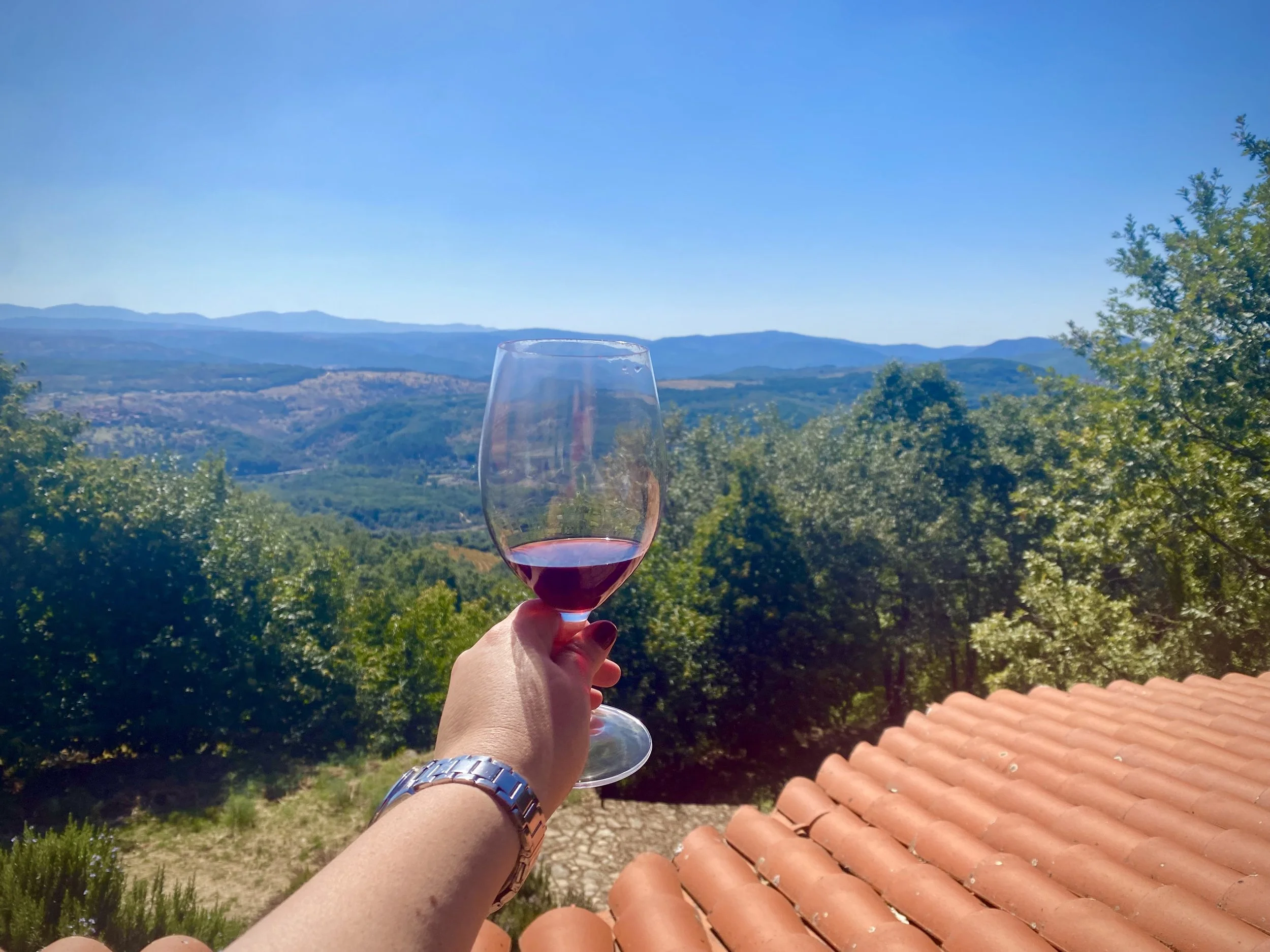
In the southern mountains of Salamanca, where medieval villages rise among forests, stone terraces and winding mountain roads, one of Spain's most fascinating wine regions remains relatively undiscovered.
The Sierra de Francia wine region, part of the Sierra de Salamanca Denominación de Origen Protegida (DOP), offers wine travelers an opportunity to experience a very different side of Spanish wine. Here, centuries-old vineyards grow on steep mountain slopes, traditional villages preserve their historic architecture, and indigenous grape varieties tell the story of a landscape shaped by isolation, migration and generations of winemaking.
At the heart of the region is Rufete, a distinctive red grape variety that has become synonymous with Sierra de Francia wine.
For travelers looking beyond Spain's better-known wine destinations such as Rioja, Ribera del Duero and Priorat, Sierra de Francia offers an intimate and authentic wine tourism experience where history, gastronomy, architecture and mountain landscapes come together.
The Ancient Wine History of Sierra de Francia
Wine production in the Sierra de Francia is deeply connected to the history of the region.
The vineyards are found in the mountainous southern part of Salamanca, near the Portuguese border and within a landscape characterized by steep valleys, forests and dramatic changes in elevation. Historical sources indicate that vineyards have been cultivated here for centuries, particularly on the slopes descending toward the Alagón and Francia rivers.
By the eighteenth century, wine production was already an important part of the local agricultural economy, with wines from the Sierra supplying communities throughout southern Salamanca.
The region's isolation also played an important role in preserving traditional grape varieties and old vineyard practices. While modernization transformed many of Spain's major wine regions, the difficult terrain of the Sierra de Francia made large-scale mechanized viticulture challenging. As a result, many traditional vineyards survived.
Today, this history continues through the DOP Sierra de Salamanca, which was officially established in 2010 to protect and promote the identity of wines produced in the region.
For anyone interested in Spanish wine history, Sierra de Francia provides a fascinating example of how geography and culture can preserve an ancient wine tradition.
Why Is It Called Sierra de Francia?
The name Sierra de Francia often surprises visitors. The region is in Spain, not France.
The name is associated with medieval repopulation following the Christian reconquest of the Iberian Peninsula. Settlers of French origin came to parts of the region, leaving their influence in local place names, surnames and cultural traditions.
However, the history of the Sierra extends much further back.
Archaeological evidence reveals prehistoric human occupation, including rock art in the surrounding mountains. The Romans also passed through and exploited the area's natural resources, including gold deposits around the Peña de Francia.
This extraordinary historical layering is part of what makes wine tourism in Salamanca so compelling. A visit to a winery can become part of a much broader journey through prehistoric, Roman, medieval and modern Spain.
Rufete: The Signature Grape of Sierra de Francia
If there is one grape travelers should know before visiting the region, it is Rufete.
Rufete is an indigenous Spanish grape variety that has been cultivated in the Sierra de Francia for generations. It is also found across the border in Portugal, reflecting the longstanding cultural and commercial connections between the two regions.
The grape is particularly well suited to the mountain environment.
Many Rufete vineyards are planted on steep terraces where cultivation requires significant manual work. Some vineyards contain very old vines that have survived for generations.
These old vineyards are one of the most valuable elements of Sierra de Salamanca wine culture. Their preservation provides an important connection to the region's agricultural history and contributes to wines with a strong sense of place.
For wine lovers interested in Spanish indigenous grape varieties, Rufete is one of the most intriguing grapes to discover.
What Does Rufete Wine Taste Like?
Rufete produces wines that can be surprisingly elegant and aromatic.
Rather than focusing exclusively on power and concentration, many Rufete wines are characterized by freshness, red-fruit aromas, spice, floral notes and refined tannins.
The official characteristics of wines from the DOP Sierra de Salamanca describe Rufete-based wines as showing aromas and flavors associated with red fruits, spices and mountain vegetation.
The combination of altitude, old vines, cool nights and mountain soils helps maintain acidity while allowing the grapes to develop ripe fruit and phenolic structure.
This creates wines that can pair beautifully with food, particularly the region's traditional cuisine.
For visitors planning a Sierra de Francia wine tour, tasting Rufete alongside local food is one of the best ways to understand the relationship between the grape and its environment.
More Than Just Rufete
Although Rufete is the region's best-known grape, Sierra de Salamanca wine is more diverse than many visitors realize.
The DOP permits red, rosé and white wines and includes varieties such as Rufete, Tempranillo, Garnacha Tinta, Viura and Muscatel de Grano Menudo.
The region is also becoming increasingly known for Rufete Serrano Blanco, a distinctive white grape that provides another expression of the area's mountain terroir.
White wines from the region can display floral, fruity and vegetal aromas combined with refreshing acidity and mineral characteristics.
This diversity makes the region particularly interesting for wine travelers who want to explore beyond the internationally famous Spanish grape varieties.
To understand Sierra de Francia wine, you need to understand its landscape.
The vineyards are planted across a complicated mixture of geological formations, including granite, slate and other ancient soils. Many vineyards occupy terraces and steep slopes overlooking the Alagón and Francia river valleys.
The climate adds another important dimension.
The Sierra de Francia has a Mediterranean influence combined with significant elevation and mountain conditions. Warm days provide the sunlight necessary for grape maturation, while cooler nights help preserve acidity and freshness.
This balance is particularly important for Rufete.
The result is a style of wine that can express both the warmth of Castilla y León and the freshness of a mountain vineyard.
For wine professionals and serious wine enthusiasts, the region offers an excellent opportunity to explore how altitude, soil, climate and indigenous grape varieties influence Spanish wine.
Wine, Villages and Architecture
One of the greatest pleasures of visiting Sierra de Francia is that wine is only one part of the experience.
The surrounding villages are destinations in their own right.
La Alberca, Mogarraz, San Martín del Castañar and San Esteban de la Sierra are among the most atmospheric places to explore. Their narrow streets, traditional stone houses, wooden balconies and historic architecture provide an extraordinary setting for a wine-focused journey.
Mogarraz is particularly famous for its unusual collection of painted portraits displayed on the façades of houses, while La Alberca is celebrated for its traditional architecture and historic village center.
This connection between wine, architecture and history makes Sierra de Francia particularly well suited to experiential travel.
Instead of simply visiting a winery, travelers can spend the day exploring a medieval village, walking through historic streets, visiting a family-owned bodega and finishing with a tasting of local wines paired with regional cuisine.
That is what makes wine travel in Spain so much more than simply tasting wine.
A Hidden Destination for Wine Tourism in Spain
Compared with Rioja, Ribera del Duero or Priorat, Sierra de Francia remains relatively unknown internationally.
For travelers, this is part of its appeal.
There are fewer large-scale wineries and fewer mass tourism experiences. Instead, visitors can discover small producers, old vineyards and traditional winemaking practices while experiencing the landscape at a much more intimate pace.
The Sierra de Francia Wine Route connects wineries, villages, gastronomy, natural landscapes and cultural heritage, making it possible to experience the region as a complete destination rather than simply a collection of tasting rooms.
For travelers staying in Salamanca, the region also offers an opportunity to venture beyond the city's famous university, Plaza Mayor and historic center and explore the mountains of southern Salamanca.
Why Sierra de Francia Belongs on Your Spanish Wine Bucket List
Spain is one of the world's great wine-producing countries, but some of its most interesting wines are found far from the internationally famous appellations.
Sierra de Francia is a perfect example.
Its vineyards tell a story of mountain agriculture. Its Rufete grape represents a remarkable indigenous wine heritage. Its villages preserve centuries of architecture and culture. Its wines reflect the combination of altitude, geology, climate and old vines.
Most importantly, the region still feels authentic.
For travelers searching for unique wine regions in Spain, wine tours from Salamanca, Sierra de Salamanca wine experiences or opportunities to discover lesser-known Spanish wine regions, Sierra de Francia deserves serious attention.
Here, wine is not separated from the landscape or the history. It is part of both.
A glass of Rufete is therefore more than a taste of Salamanca. It is a taste of the mountains, the vineyards, the villages and the generations of people who have cultivated this remarkable corner of Spain.
For wine travelers who want to go beyond the famous names and discover the stories behind Spain's indigenous grapes, Sierra de Francia is a destination worth exploring.
At Global Wine Pursuit, we believe the most memorable wine journeys are about more than what is in the glass. They are about the people, landscapes, history, architecture and gastronomy that make each wine unique.
Ready to experience the magic of Peloponnese wines firsthand?
Join Global Wine Pursuit Tours on our exclusive luxury tours to Spain that visit notable wine regions of the country. Our tours visit the most prestigious wine regions with private winery visits, gourmet lunches, hands-on cooking experiences, and guided tours of ancient sites. Reserve your place today and discover why the Spain continues to be one of Europe’s most exciting wine destinations.
